

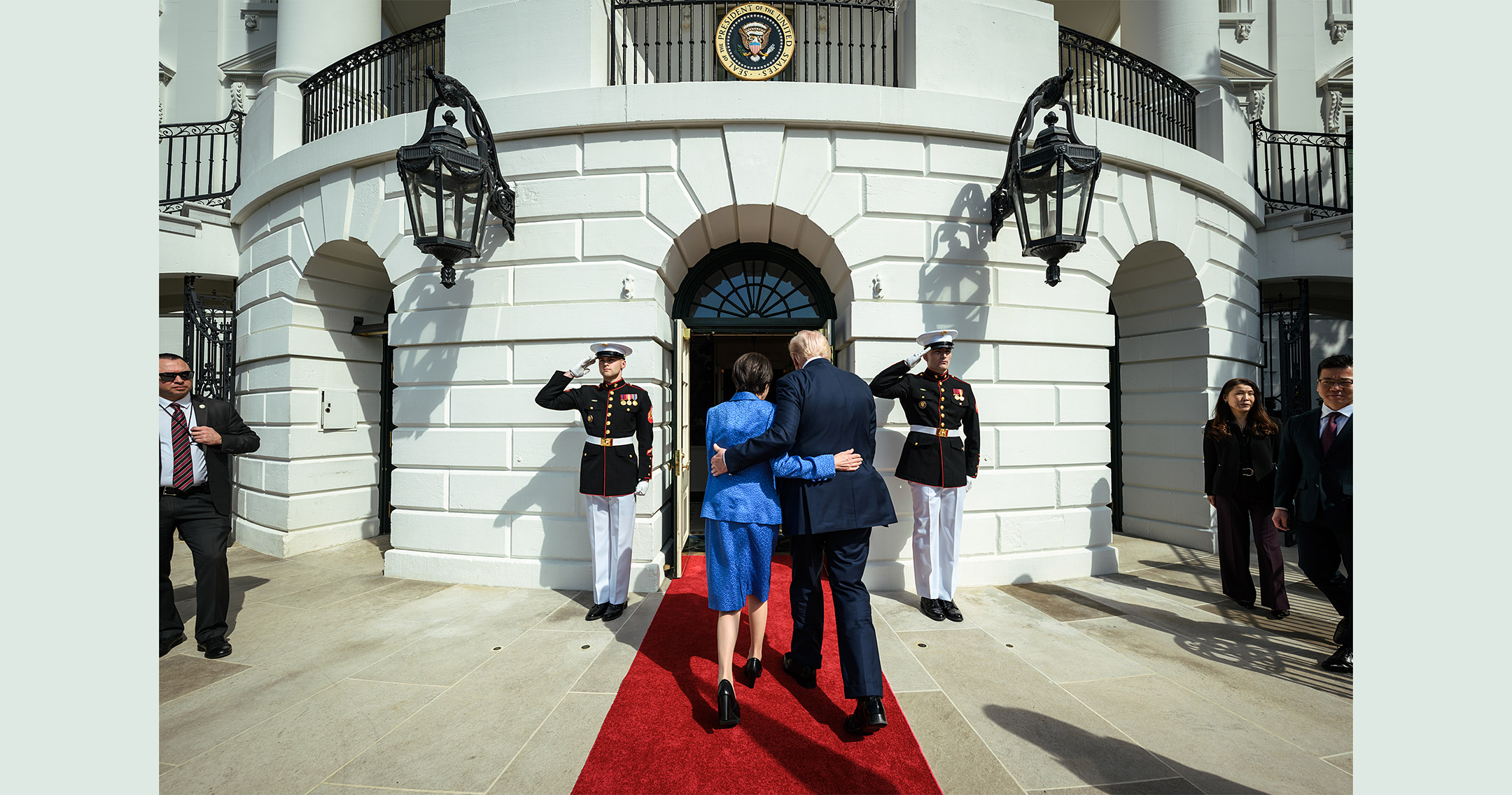
Photo: White House gallery
What is happening?
In the wake of the U.S. and Israel’s attack on Iran, leading to a blockade of the Strait of Hormuz, U.S. President Donald Trump called on allied nations, including Japan, to provide military support. The request placed Japanese Prime Minister Sanae Takaichi in a difficult position, particularly as it came just ahead of a scheduled U.S.–Japan summit in Washington that was originally intended to focus on issues such as supply chain security and Japanese investments.
Based on the outcome of the summit, the two sides appear to have found common ground in the Iranian question, with Takaichi outlining Japan’s capabilities and limitations regarding the deployment of the Japanese Self-Defense Forces (JSDF) in the region. However, Tokyo should be wary that its constitutional constraints might not provide unshakeable grounds for declining involvement in Trump’s plans.
What is the broader picture?
Over the past week, Trump has repeatedly expressed his expectation that Tokyo would provide military support to help secure shipping through the Strait of Hormuz, currently disrupted by Iranian regime in response to the joint U.S.–Israeli attack. This has sparked intense debate within the Japanese government over the potential deployment of the JSDF, with Defense Minister Shinjiro Koizumi acknowledging that, in general, “protecting vessels related to Japan is possible.” However, Japan’s legal framework does not readily permit the dispatch of its forces to an active combat zone.
Japan’s pacifist constitution, which was introduced after World War II, significantly restricts the use of its military. The deployment of the JSDF to a battleground is permitted only in the case of a “survival-threatening situation,” making direct participation in the conflict with Iran highly unlikely. Speculatively, Japan’s heavy reliance on Middle Eastern oil (roughly 90% of its imports) might qualify as such threat, although this interpretation would be politically and legally controversial. In addition, recent polling indicates that around 80% of Japanese disapprove of the war against Iran. Even Takaichi’s strong parliamentary mandate might not be sufficient to override such public opposition.
Historically, the Middle East and Africa (MEA) region has been tied to key milestones in the gradual expansion of the JSDF’s operational capabilities. This process began with the force’s 1991 deployment to the Persian Gulf for mine-clearing operations after the Gulf War, continued with a support role in the Afghanistan war after 2001, and culminated in the establishment of a permanent naval base in Djibouti in 2011. Today, it remains Japan’s only long-term overseas military base, hosting maritime destroyers, patrol aircraft and around 400 personnel. Although their participation in the current conflict is unlikely, there could be further calls for action from Washington.
Nevertheless, despite tensions over the Iranian question, the summit was described as successful in Japanese media. On March 19, the White House published a list of U.S.–Japan agreements, which were announced following Takaichi’s meeting with Trump. The initiatives include strengthening energy security and expanding trusted supply chains for critical materials, in response to Chinese export restrictions, which affect both countries. Another key area is deterrence and defence cooperation, pledging to increase missile production and deployment in Japan. Notably, both countries reaffirmed their commitment to maintaining peace and stability across the Taiwan Strait, while also coordinating with third countries to mitigate threats from “strategic competitors and rogue states.”
Why does it matter?
The episode has provoked tensions within the U.S.–Japan alliance, where Washington’s pressures clash with Japan’s legal and political realities. Although Takaichi successfully deflected focus on Iran during her sit-down with Trump by leveraging strategic and investment agreements, the US immediately renewed its calls for military assistance after the meeting.
More broadly, Trump’s unpredictable moves raise doubts about his commitment to Indo-Pacific security. With the growing threat of Chinese aggression toward Taiwan, the long-term reliability of U.S. support is becoming a central question for the region.