

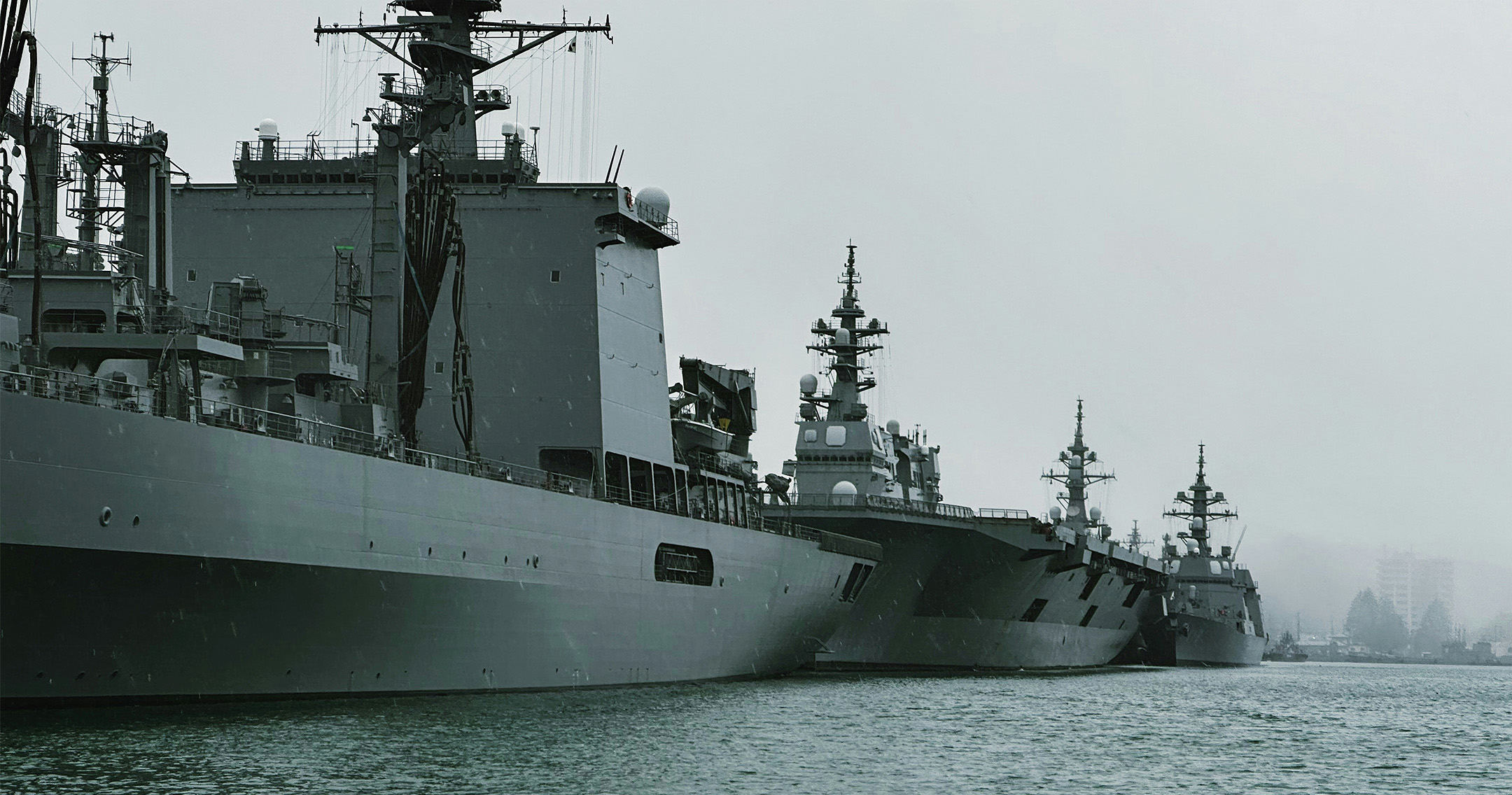
Photo: Unsplash
What is happening?
On December 29–30, 2025, the People’s Republic of China (PRC) conducted another large-scale naval military exercise in the vicinity of Taiwan under the name Justice Mission 2025 (正義使命). This marked the eighth major exercise of its kind, officially intended to simulate a naval blockade of the island and its key port infrastructure. At the same time, however, the drills served as systematic preparation of the People’s Liberation Army (PLA) and the China Coast Guard (CCG) for offensive and amphibious operations in the event of a Chinese invasion of Taiwan. In terms of both scale and complexity, these maneuvers rank among the most extensive military and naval operations Beijing has ever undertaken. Through these actions, the PRC continues to escalate tensions in Taiwan Strait and increase the risk of conflict outbreak in a region whose stability has direct implications for global peace. Taiwan is thus increasingly positioned at the very epicenter of strategic competition.
What is the broader picture?
Although Beijing officially frames the exercises as a rehearsal of a maritime quarantine within what it describes as its own renegade province, the maneuvers also included live-fire drills, with several projectiles and significant number of ships — for the first time ever —reportedly interfered directly with Taiwan’s contiguous zone. Moreover, the nature of certain assault and amphibious operations closely resembled preparations for military counteroperations against an external force that might attempt to disrupt or break a Chinese naval blockade. According to some analysts, selected scenarios were also focused on rehearsing a direct military invasion, including potential operations aimed at the rapid destabilization and decapitation of the political leadership in Taipei.
Another prominent feature of the recent maneuvers was the emphasis on the effective integration of multiple China Coast Guard vessels and their coordination with the PLA Navy. In the event of an actual naval blockade, the CCG would play a key role in controlling maritime traffic and conducting inspections of civilian and commercial vessels approaching the island. Through this approach, Beijing strives to create an appearance of legitimacy for its territorial claims and military operations under the pretext of enforcing Chinese internal law. Through this “civilian” component, the PRC seeks to portray any potential military action against Taiwan — whether in the form of a naval blockade or an amphibious invasion— as a just domestic issue, both under Chinese law and, purportedly, under international law.
Over the past two weeks, numerous analysts have already provided detailed assessments of the technical and operational aspects of these naval maneuvers. Nevertheless, it is worth revisiting why Beijing chose to escalate precisely at this moment. One possible factor is China’s response to a recent diplomatic rift between Tokyo and Beijing, which we discussed in a previous edition of this briefing. Historically, however, such exercises have almost without exception been primarily reactions to political and diplomatic developments along the Washington-Taipei axis. Indeed, the maneuvers took place against the backdrop of a US$11.1 billion arms deal between the United States and Taiwan, the largest ever sale to Taipei. More important than the headline figure, however, is the composition of the deal itself.
In a previous edition of this briefing, we noted that, with the arrival of Donald Trump’s second administration, Taiwan once again appeared poised to pursue large-scale military procurements. At the time, it remained unclear whether a more conservative approach would prevail — focused on acquiring highly sophisticated and expensive systems that cannot quantitatively match Chinese capabilities — or whether Taipei would further commit to the long-debated “porcupine strategy.” Under this doctrine, Taiwan prioritizes the acquisition of larger numbers of smaller, highly mobile, yet no less lethal weapons systems designed to inflict disproportionate costs on invading PLA forces, deter aggression, or even deny China the very feasibility of a military invasion.
The newly announced military packages clearly reflect this strategic choice. They include eighty-two M142 HIMARS rocket launchers, along with hundreds of rounds of precision short-range missiles for these highly mobile rocket systems. Of particular note is the sale of 420 missiles in the ATACMS category, which have a range of up to 300 kilometers, enabling Taiwanese HIMARS units to strike Chinese invasion forces while they are still on the mainland, within the coastal province of Fujian. This would significantly complicate the logistics and execution of any invasion plans. Taipei will also substantially strengthen and modernize its artillery capabilities through the acquisition of 60 new highly mobile M109A7 self-propelled howitzers. Packages further include an unspecified number of modern loitering munitions, precision-guided weapons, and likely hundreds of portable anti-armor systems such as Javelins. These systems are easier to disperse, difficult to target and capable of inflicting severe losses on invading forces.
Why is it important?
Given the composition of the deal, it is evident that strategic pragmatism has prevailed in both Washington and Taipei over commercial interests and ideological considerations. Whereas in previous years the sharpening of Taiwan’s “porcupine” was driven primarily by the Biden administration, the first Trump administration tended to prioritize the sale of technologically advanced but extremely costly weapon systems — such as F-16 fighter jets or Abrams main battle tanks — whose utility for asymmetric defense has long been subject to debate. In light of the pronounced imbalance of forces between the two sides of the Taiwan Strait, it is clear that Taipei will sooner or later have to rely on an asymmetric warfare strategy, if the island’s defense is to remain viable in the event of a Chinese attack. The fact that both Washington and Taipei are now moving in this doctrinal direction represents a strategically significant and encouraging development.