

Photo: Unsplash.com
What is happening?
Taiwan’s opposition-controlled Legislative Yuan approved the government’s 2026 budget on August 14, authorizing $93 billion in expenditures. The vote came after an unprecedented 350-day delay since the cabinet first submitted the original proposal. The budget negotiations have unfolded against the backdrop of a political deadlock that has persisted for nearly two years between the ruling Democratic Progressive Party (DPP) and the opposition Kuomintang (KMT) and Taiwan People’s Party (TPP). The opposition parties together hold a majority in the legislature, which has enabled them to effectively block a significant portion of the government’s agenda.
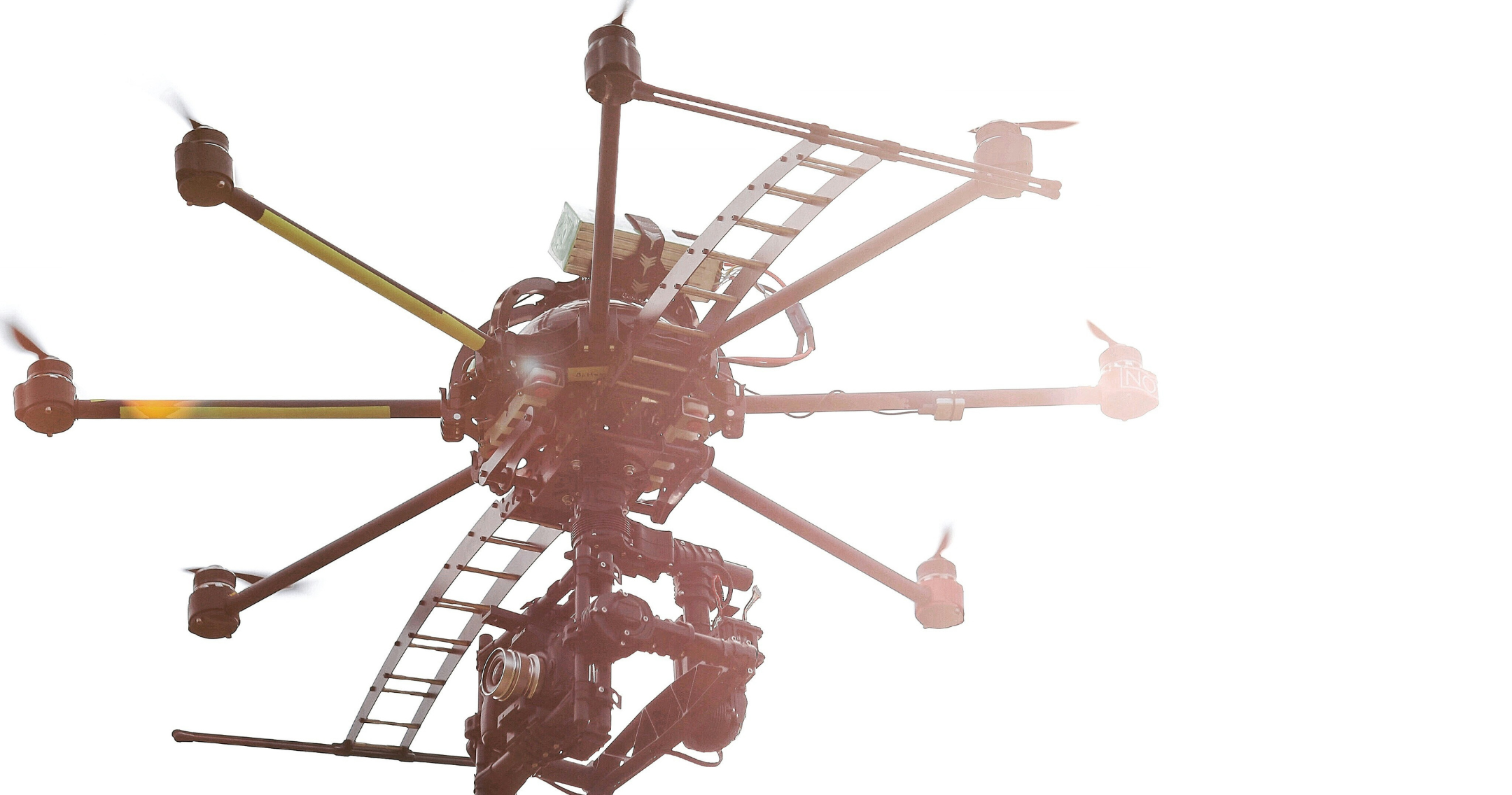
From the perspective of Taiwan’s security and defense policy, however, several other aspects warrant particular attention. The government’s 2026 budget also includes almost $2 billion for drone industry development and procurement – so called drone budget. However, more important, a $6,6 billion special package – also known as special drone budget – continues to stall after protracted negotiations on 14 competing proposals failed to achieve consensus. The DPP favors long-term and stable funding through the special drone budget, which it argues offers flexibility and predictability, while the opposition contends that appropriations through annual legislative review would guarantee stricter oversight. Yet, with approval of special drone budget, as well as its final scope and structure, hanging in the balance, the KMT has once more been accused of holding Taiwan’s defense needs hostage as part of political wrangling at a moment when time factor can play a crucial role in country’s sufficient preparedness.
What is the broader picture?
From the perspective of building the island’s defense capabilities, special drone budget represents a far more significant item. These expenditures were originally intended to form part of the so-called special defense budget, proposed primarily to finance an unprecedentedly large-scale arms procurements from the United States. In an effort to break the political deadlock, however, this component was removed from the proposal, and the government reached an agreement with the opposition that the special drone budget would subsequently be negotiated separately. Its purpose differs substantially from that of the already approved drone budget. While the latter is primarily focused on developing Taiwan’s domestic drone industry and procuring mainly non-lethal unmanned systems, the special drone budget is intended to finance the acquisition of more than 200,000 loitering munitions, approximately 1,500 reconnaissance drones, and around 1,300 additional unmanned systems. The ruling DPP is thus betting on the assumption that, in the event of an attempt by the People’s republic of China (PRC) to alter the status quo in the Taiwan Strait, the mass deployment of drones could significantly complicate Chinese military operations. The objective would be, above all, to saturate the battlefield with vast number of inexpensive unmanned systems, disrupt the adversary’s ability to effectively exploit its numerical superiority, and raise the costs and risks of a potential attack to such an extent that Beijing would be unable to bring Taiwan under military control. Unlike on the Ukrainian battlefield, however, the key battles would likely be fought at sea.
The fact that the drone budget was approved in its original form was, however, a surprise to some observers, as it is one of the few issues on which the government has reached common ground with the opposition. The decisive role in securing this initial agreement had to be eventually played by lawmakers from KMT, a party that has repeatedly drawn criticism from both domestic political opponents and foreign observers for turning national security into an instrument of partisan politics. One source of contention over drone spending – including special drone budget – has been reportedly the KMT’s concern that a significant share of the companies expected to receive government’s drone funding are politically aligned with the ruling DPP. At the same, firms considered close to the KMT often maintain substantial investments in the PRC, which could effectively disqualify them from competing for these funds.
The broader security context is, however, more important. Taiwan is facing significant pressure from Beijing, with Chinese vessels permanently operating around the island, while carrying out an almost continuous range of hybrid maritime operations. Their objective is, among other things, to gradually normalize China’s presence in the surrounding waters and create the perception that the PRC legitimately exercises jurisdiction in the area. Taipei also faces growing pressure from the international community, particularly from the administration of U.S. President Donald Trump, which has repeatedly made clear that Taiwan must do more to strengthen its own defense. It is therefore likely that the KMT softened some of its original demands for a combination of political, security, and diplomatic reasons.
The logic of asymmetrical warfare also underpins Taiwan’s newly announced cooperation with the US in the field of unmanned technologies. U.S. startup Vatn Systems and Taiwan’s state-backed weapons manufacturer, NCSIST, have signed a memorandum of understanding covering the local mass production of modular S12 unmanned underwater vehicles (UUVs), as well as AI-enabled command-and-control systems. Once again, the central premise is to prioritize quantity, with a goal of manufacturing relatively inexpensive systems at scale, allowing Taiwan to field them in numbers that would be difficult for an adversary to effectively neutralize. These systems, however, are designed to serve a dual purpose. During periods of heightened tension, they could significantly improve Taiwan’s ability to monitor the activities of the Chinese navy and coast guard, while also helping detect threats to critical undersea infrastructure, including submarine cables. In the case of an open conflict, however, their primary mission would be to help deny the PRC the ability to establish and maintain control over the Taiwan Strait.
Why does it matter?
Taiwan already has its own indigenous UUV programs, but cooperation with U.S. companies could introduce a different model centered on lower-cost systems that can be produced at scale. How effective a mass deployment of UUVs would prove in an actual maritime campaign, however, remains an open question. The concept has yet to be tested in a real-world conflict. Ukraine’s experience nevertheless suggests that drones can serve as a critical tool for successfully defending against an adversary with overwhelming numerical and material superiority. Building a robust domestic drone industry will therefore be one of the key elements of Taiwan’s security and defense – or so-called porcupine – strategy in the years ahead and could offer democratic countries a competitive alternative to China’s world-leading drone industry. Sufficient and sustained drone funding will be essential to its successful development. This makes it particularly important whether, when, and to what extent Taiwan’s political parties can reach agreement on the approval of the special drone budget.