

Photo: Canva.com
What is happening?
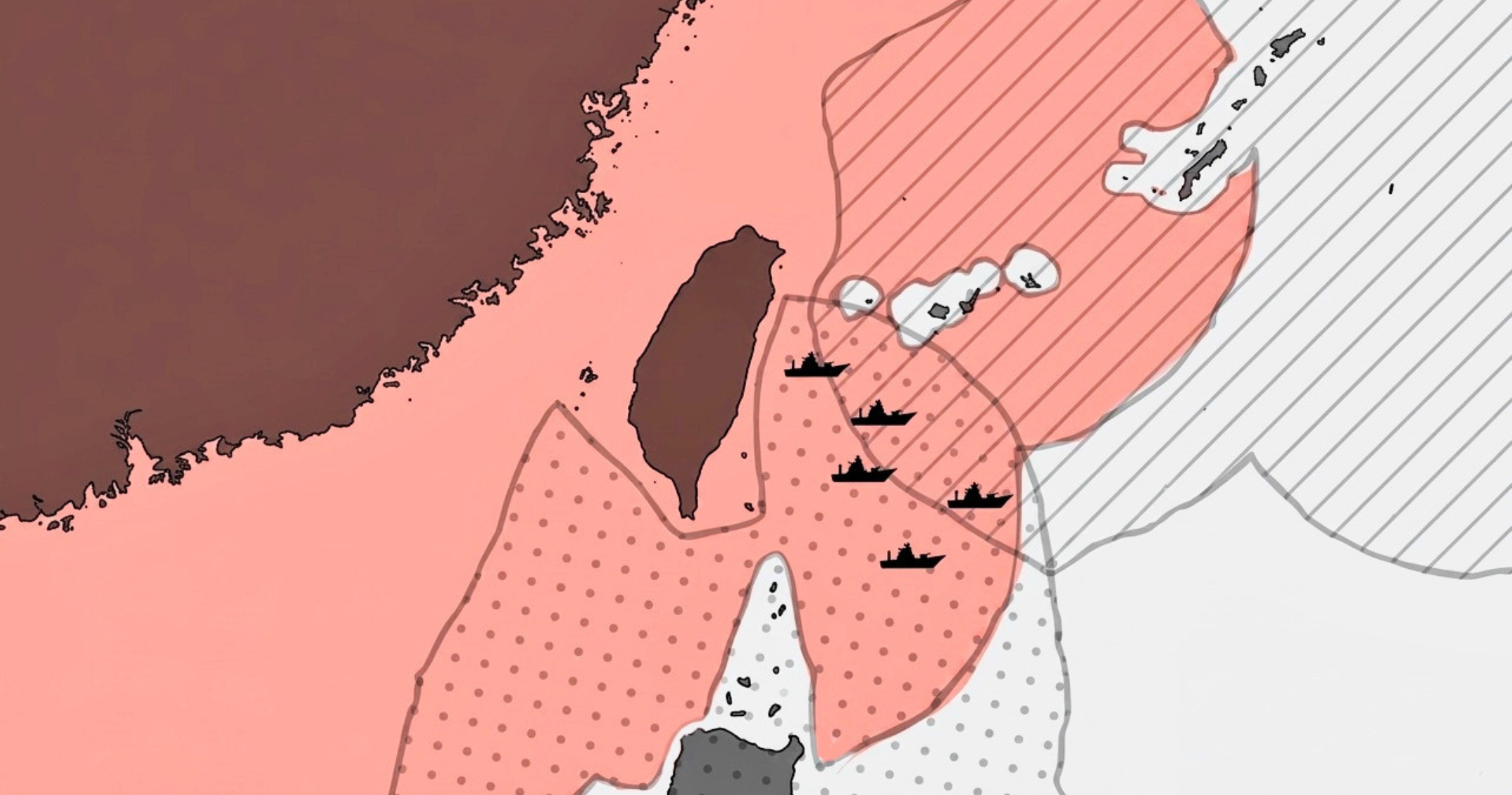
Over the course of this month, Beijing has intensified its maritime presence in the waters east of Taiwan, acting as though this region of the Pacific Ocean falls under the jurisdiction of the People’s Republic of China (PRC). This behavior comes in response to recent negotiations between Tokyo and Manila on the delimitation of their exclusive economic zones (EEZs), a process promoted as another step toward strengthening relations between the two capitals. The proposed zones, however, also overlap with waters Taiwan declares a right to, while PRC simultaneously unlawfully claims them as its territory.
The following intensified activity from PRC vessels in the region can be interpreted both as an assertive territorial claim and as a warning to neighbors not to challenge Chinese territorial interests. Yet, this behavior has no legitimate legal basis and has been condemned by the U.S. as well as United Kingdom, France, and Germany due to the threat to regional stability and freedom of navigation.
What is the broader picture?
Since Beijing considers the Republic of China (ROC) part of its sovereign territory, it strongly criticized the announcement of official talks between Japan and the Philippines on the delimitation of the maritime boundary between Yonaguni Island and Mavulis Island, located in the waters east of Taiwan, arguing that without its own participation, such negotiations would be illegitimate. Nevertheless, this position has been called unreasonable by Japanese experts on maritime law, as it is common practice for two states to delimit their maritime boundary before addressing overlapping claims involving a third party. Although Taipei initially also sought to participate in the negotiations, President Lai Ching-te (賴清德) later stated that Taiwan’s rights in the relevant waters are protected, citing the United Nations Convention on the Law of the Sea (UNCLOS) as well as existing fisheries agreements with the two countries in question.
Chinese denial is not only rhetorical. Since the beginning of June, China’s Coast Guard (CCG) has intensified patrols east of Taiwan, describing them as “maritime traffic law enforcement.” By June 24, it had inspected around 200 passing vessels, demonstratively asserting PRC jurisdiction over the area. Taipei described the behavior as “harassment” of merchant ships and questioned the legitimacy of the Chinese presence.
Notably, two CCG ships also entered the Japanese EEZ off Yonaguni island and remained there for over a day. While trespassing by Chinese government vessels is not unusual, this case included a notable nuance. When confronted by the Japanese Coast Guard, for the first time the CCG crews boldly claimed that the waters fall under Beijing’s jurisdiction, significantly increasing bilateral tensions.
Lastly, Beijing dispatched a maritime survey vessel to the waters in question, presenting the mission as a “marine environmental survey.” Two CCG vessels escorted the expedition, which mapped undersea conditions, including marine chemistry and hydrometeorological patterns, officially labeled as efforts to protect the marine environment. However, at the heart of this supposedly noble cause there is a collection of data that could support submarine operations and undersea detection capabilities. This is particularly significant for the PRC, as the area forms a strategic maritime chokepoint that would be highly relevant in any future blockade or military operation involving Taiwan.
Why does it matter?
Beijing is continuously intensifying its efforts to expand maritime control over the South China Sea and beyond, gradually normalizing the presence of its vessels in disputed waters. Its assertive activities within the Nine-Dash Line ignore international law, while attempts to resist are met with economic pressure or targeted sanctions.
Aggressive Chinese policies have arguably strengthened the opposing bloc – one example being the development of the Japan–Philippines relationship into a Comprehensive Strategic Partnership, which includes close military cooperation. In this game of chicken, however, it is important that the opposing states, including the European democracies, do not back down too soon and also strike back, for fear that China loses any remaining restraints on its expansionist behavior.