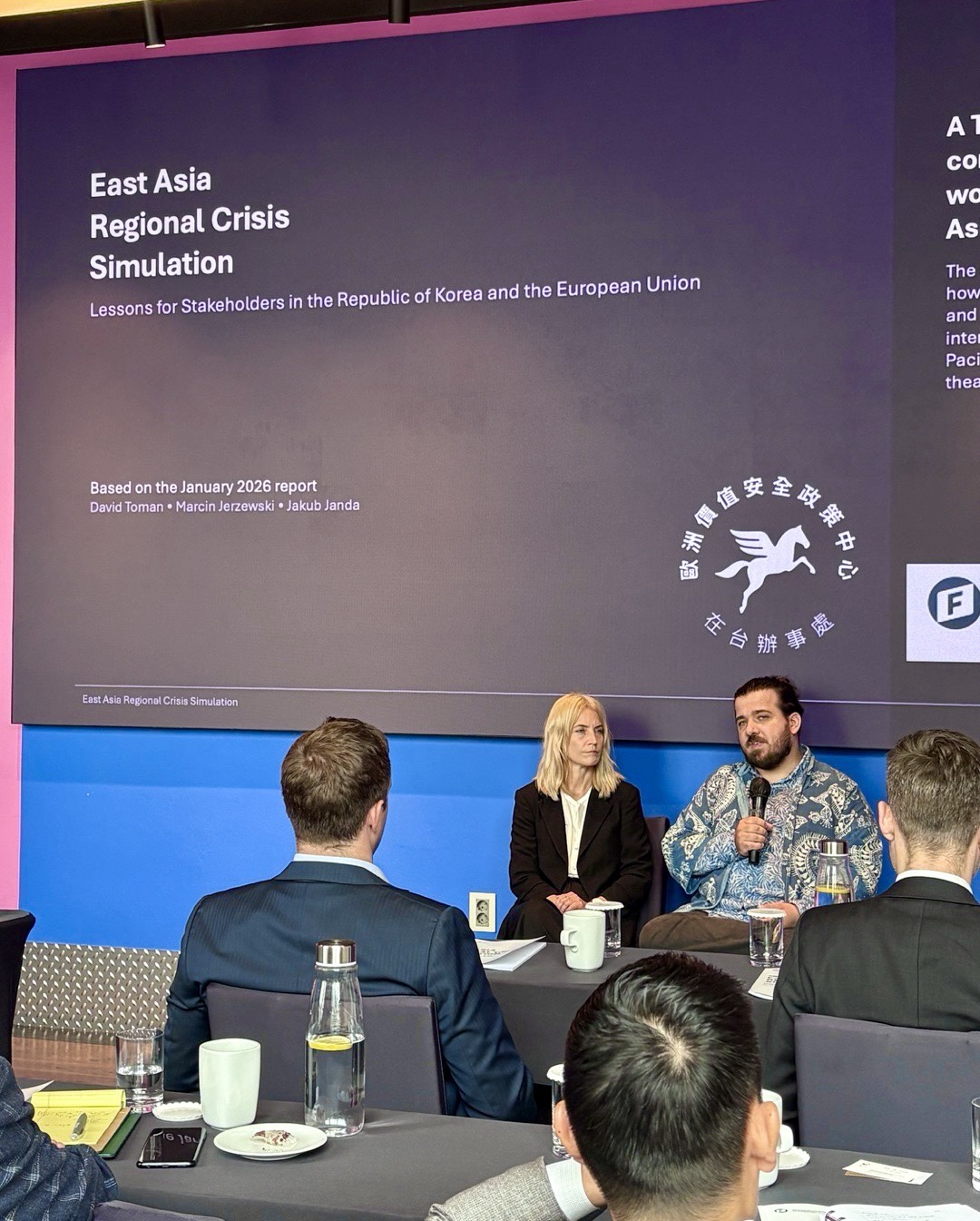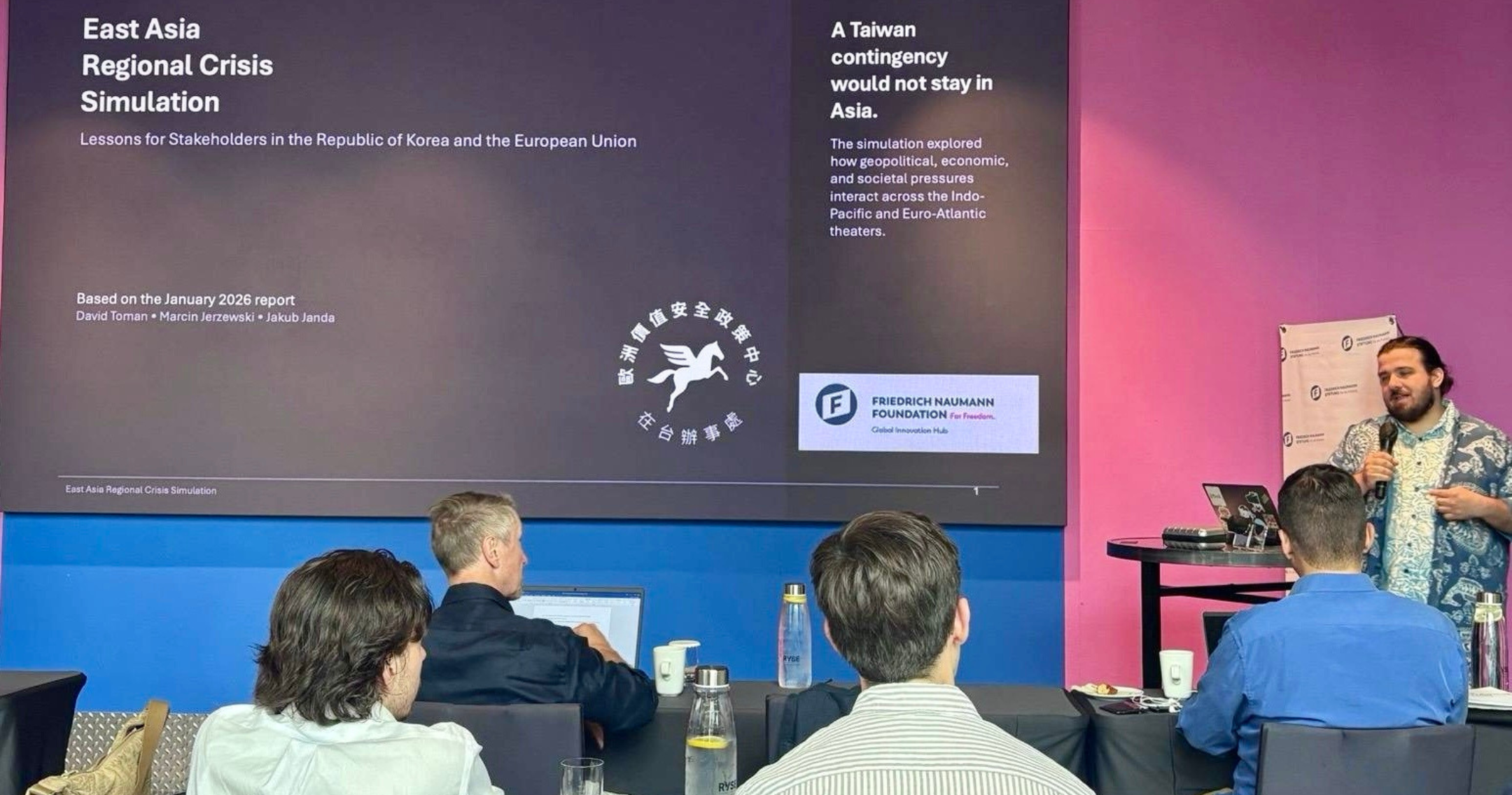
The European Values Center for Security Policy Taiwan Office, in cooperation with the Friedrich Naumann Foundation for Freedom (FNF), co-hosted the launch of the policy paper East Asia Regional Crisis Simulation: Lessons for Stakeholders in the Republic of Korea and the European Union in Seoul.
The policy paper draws on a crisis simulation conducted in Seoul that explored a scenario involving a Chinese maritime quarantine of Taiwan alongside parallel escalation in Europe. The exercise examined how military, political, economic, and societal developments could interact during a multi-theater crisis, highlighting the importance of coordinated planning and preparedness among democratic partners.
During the two-day event, Marcin Jerzewski, Head of the European Values Center Taiwan Office and co-author of the policy paper, presented the simulation scenario and its principal findings. His presentation examined the dynamics of a potential East Asia contingency, focusing on escalation pathways, economic coercion, supply chain disruptions, evacuation challenges, and the decision-making of key stakeholders, including the United States, Japan, the European Union, and regional partners. The discussion underscored the importance of pre-contingency planning, stronger coordination mechanisms, and practical operational frameworks to support effective crisis response.
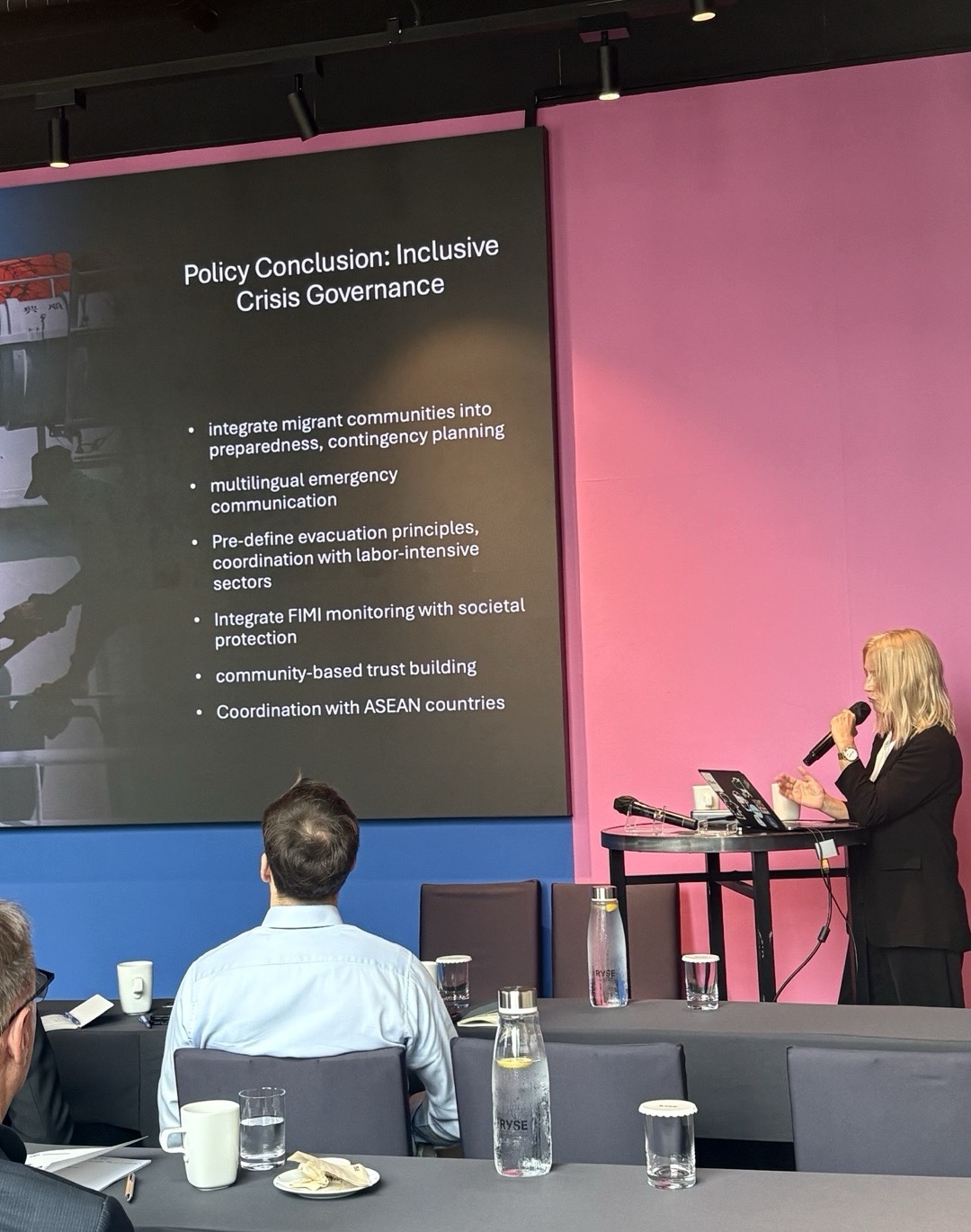
Dr. Olimpia Kot, Senior Project Coordinator at the European Values Center Taiwan Office, complemented the strategic perspective by examining the societal dimensions of crisis preparedness. Drawing on the policy paper’s findings, her presentation explored how structural inequalities shape vulnerability during emergencies, with particular attention to migrant workers, evacuation prioritization, and the impact of targeted disinformation. The discussion emphasized that strengthening resilience requires a whole-of-society approach that integrates social inclusion into contingency planning and crisis governance.
By combining strategic and societal perspectives, the event contributed to broader discussions on democratic resilience and cross-regional cooperation in responding to complex security challenges. The policy paper offers practical recommendations for policymakers seeking to strengthen preparedness and coordination in the face of contingencies that could have far-reaching consequences for both the Indo-Pacific and Europe.