

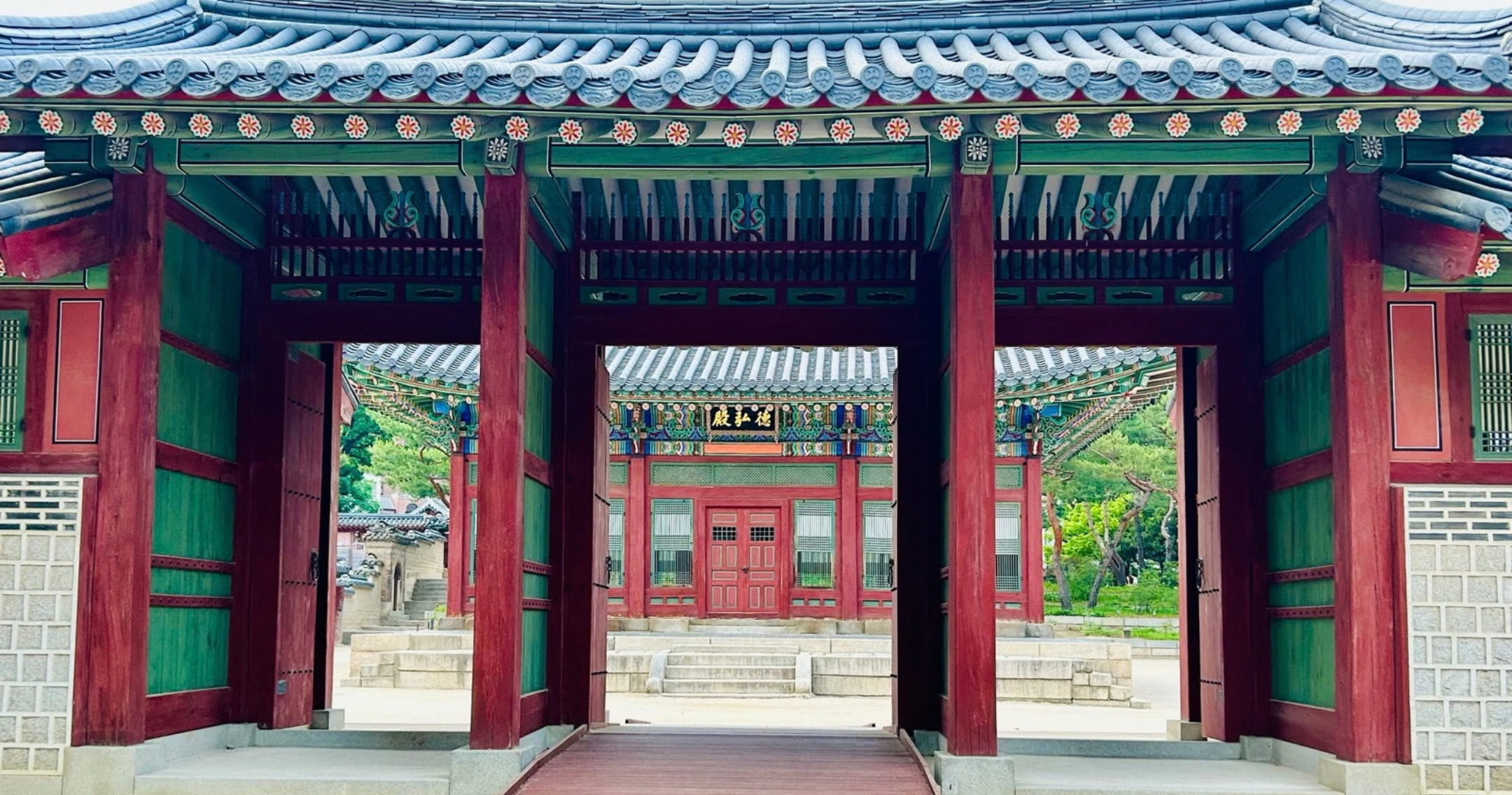
Photo: A Hall in Deoksugung Palace complex, Seoul. Image by Olimpia Kot, EVC
What is happening?
On September 16, the presidents of the Central Asian states of Kazakhstan, Kyrgyzstan, Tajikistan, Turkmenistan and Uzbekistan attended a Korea-Central Asia Summit in Seoul.
The gathering presided over by South Korean President Lee Jae Myung, focused on future cooperation and strengthening partnership in innovation, prosperity and connectivity. It was the first time the president of South Korea had met with all five leaders of the Central Asia states at once.
The result of the summit is the Seoul Declaration that serves as a foundation for advancing the Korea-Central Asia relationship and adopting a cooperation agenda for the next 30 years. The representatives agreed to hold the summit biennially, with the second event to take place in 2028 in Kazakhstan. It was also decided that the consultations at various levels will be institutionalized to help identify and implement concrete projects.
What is the broader picture?
Foremost on the summit agenda were discussions of practical economic cooperation. The 30-year cooperation plan established during the forum focuses on critical materials, energy and infrastructure among other concerns.
The declaration created at the forum, which stems from a vice-ministerial-level dialogue that began nearly 20 years ago, emphasizes the importance of mutually beneficial value chains. South Korea wants to diversify its sources of critical materials, especially those used in the semiconductor and battery industries. Central Asian countries, abundant in said materials, want a larger role in manufacturing products from their sources. To achieve this, they need investment, technology and modernization of old Soviet-era infrastructure. Meanwhile, South Korea is known for its rapid economy growth, which is something Central Asia is trying to replicate.
Korean companies are already present in the region, specifically in the automotive and construction sectors. From 2021 to 2025, trade volume between South Korea and Central Asia increased by 90% to US$10 billion. Korean expertise in infrastructure, technology and manufacturing complements Central Asia’s growing market, rich natural resources and young workforce. Korea also has very specific ties to the region: Central Asia is home to the biggest Korean diaspora, as over 300 000 ethnic Koreans were displaced from Russia in 1937 by the Soviet regime.
Aside from economic cooperation, the six leaders also stressed the importance of the denuclearization of the Korean peninsula, pledging to help establish long-lasting peace, fight crime and address security threats.
Why is it important?
Cooperation with South Korea is a great opportunity for Central Asia to modernize its economy. Korean engagement and influence can also bring stability to the region by providing a partnership model different from those offered by other global actors.
In an era when supply chains are showing increased vulnerability, Europe can benefit as well: A transport and logistics chain stretching from Korea through Central Asia to Europe was among the proposals at the summit. The Middle Corridor — also known as the Trans-Caspian International Transport Route — which extends from Central Asia, across the Caspian Sea toward Europe, has been attracting attention lately as an alternative to routes through Russia. For this reason, transport and the establishment of strong supply chains were focal points of the summit.