

Photo: Unsplash.com
What is happening?
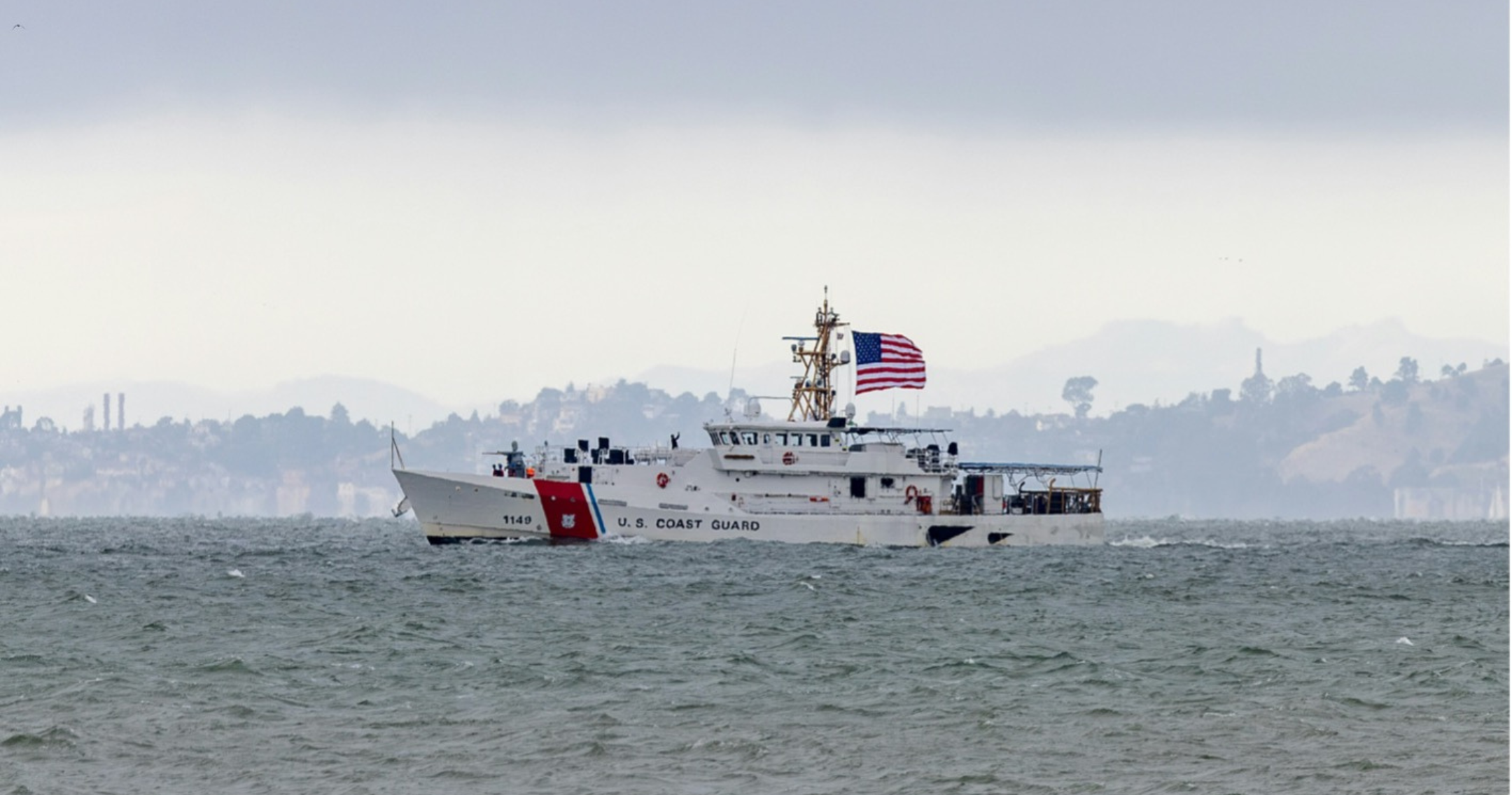
The United States (US) and Taiwan have publicly announced that their coast guards recently conducted a joint maritime exercise, marking the first public acknowledgment of such drills in decades. While practical cooperation between the two services is not new – it has developed under the 2021 U.S.-Taiwan Coast Guard Memorandum of Understanding – its public display represents a notable shift in U.S. strategic signaling. The American Institute in Taiwan (AIT) – Washington’s de facto embassy in Taipei – released photographs of the legend-class U.S. Coast Guard (USCG) cutter Midgett sailing alongside Taiwan’s Coast Guard Administration (CGA) patrol frigate Taipei, accompanied by a statement highlighting cooperation in search and rescue, disaster relief, maritime resource protection, counter-illegal fishing operations, and narcotics interdiction. The CGA adopted a sharper message, emphasizing joint efforts to combat semiconductor smuggling and prevent advanced technologies from supporting authoritarian military expansion. The announcement is therefore significant, not because the exercise itself is unprecedented, but because Washington deliberately chose to make it public.
What is the broader picture?
For years, practical cooperation largely remained out of public view in order to avoid piquing Beijing’s ire. By openly showcasing joint coast guard operations, however, Washington appears increasingly willing to normalize visible operational cooperation with Taiwan as a routine component of regional security. Equally important is the platform through which this message is being conveyed. Rather than deploying a naval task force or announcing another freedom of navigation operation, Washington this time went whole hog with the USCG – deploying a force specifically designed to operate in the increasingly contested space between civilian law enforcement and military power. This approach reflects the character of maritime competition in the region, where Beijing has increasingly employed non-naval instruments to advance its strategic objectives.
That distinction matters because Beijing itself has steadily shifted power competition into the gray zone domain. The China Coast Guard (CCG) has become Chinese Communist Party’s (CCP) principal lawfare instrument for advancing territorial claims and applying coercive pressure without triggering an outright military confrontation. The CCG’s vessels increasingly harass those of other nations, conduct unlawful inspections, shadow commercial shipping, harass Taiwanese fishing vessels, and thus establish a persistent and illegal maritime law-enforcement presence designed to gradually reshape the operational environment and influence international perceptions of its territorial claims in the South China and East China Seas. These actions are widely understood as elements of Beijing’s gray-zone coercion and “salami-slicing” strategy, while also potentially serving as preparation for more extensive operations, including a maritime quarantine or blockade of Taiwan. The U.S. response, therefore, seeks to address this challenge within the same operational domain. Rather than escalating through additional military deployments alone, Washington is strengthening Taiwan’s maritime law-enforcement capabilities, reinforcing its legitimacy, and improving interoperability in precisely the environment where Beijing is attempting to gain strategic advantage.
The diplomatic messaging is equally revealing. By explicitly referring to the “Taiwan Coast Guard” rather than relying on more ambiguous terminology, the AIT implicitly acknowledges Taiwan as a legitimate maritime law-enforcement authority. While seemingly a technical choice, such language reinforces Taiwan’s status as a legitimate operational partner and reflects Washington’s growing willingness to treat Taipei as an increasingly integrated element of the regional security architecture.
Why is it important?
Strategically, this episode is less significant as a single joint exercise than as a step toward normalizing deterrence below the threshold of armed conflict. For decades, U.S. support for Taiwan has been premised on strategic ambiguity – not only in political signaling but also in operational practice. The current security environment, however, increasingly rewards creative approaches. As Beijing expands its tools of hybrid coercion to advance its objectives, without resorting to open conflict, deterrence must operate in the same manner. More importantly, the key question is whether Washington will translate this emerging approach into a sustained presence and normalize joint USCG–CGA law-enforcement operations, as well as other forms of maritime operations in the region, over the coming years.