

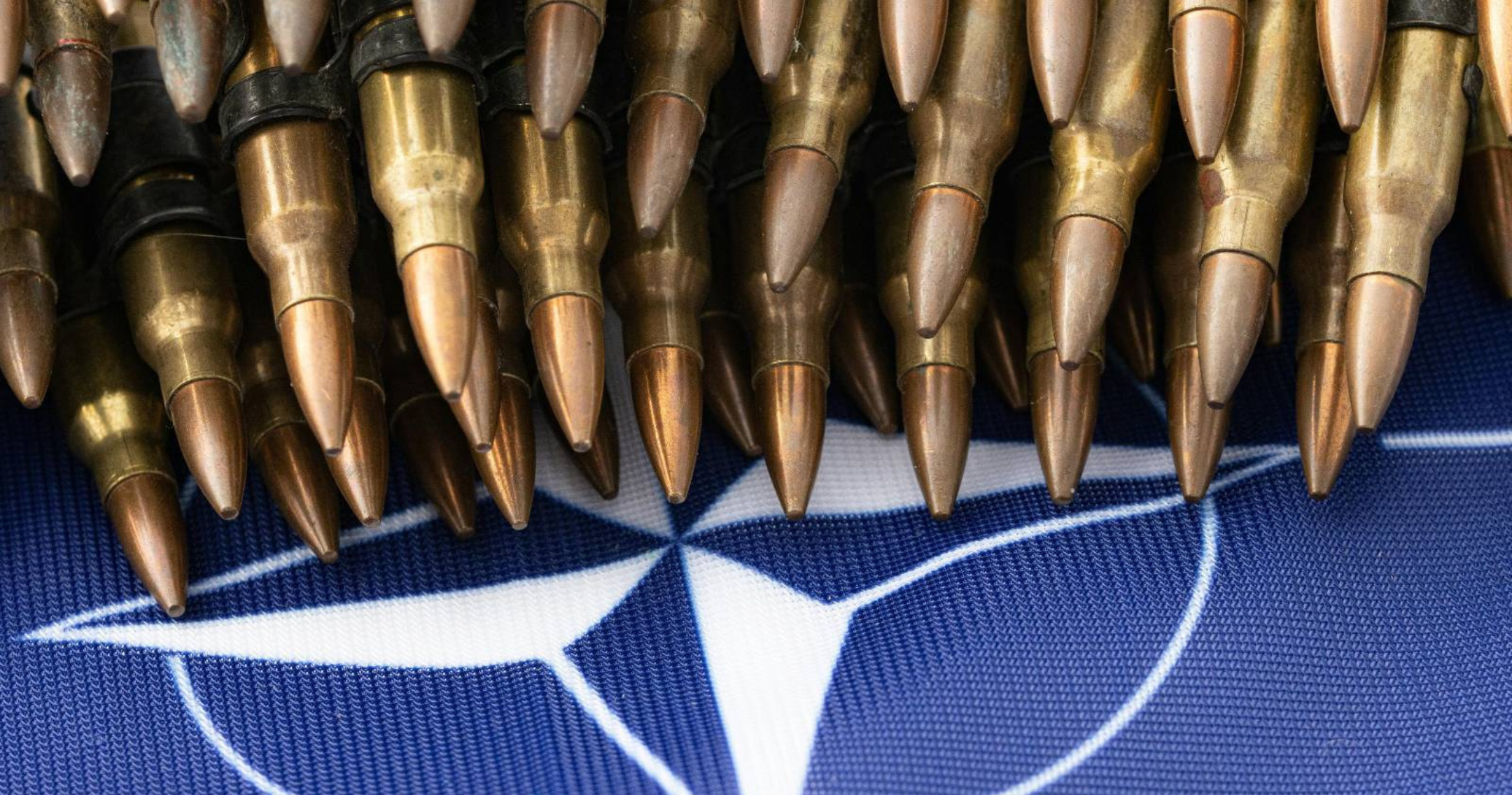
Photo: Unsplash.com
What is happening?
This year’s NATO Summit in Ankara was marked by a reaffirmation of the commitments made by member states at last year’s summit in The Hague. These include a significant increase in defense spending – up to 3.5% (5%) of GDP by 2035 – as well as a burden shifting of NATO’s defense expenditure toward the European flank. However, the Ankara summit did not bring any fundamental developments regarding the alliance’s broader strategic direction. Instead, the most significant progress continues to be made through sustained support for Ukraine and deeper cooperation across the defense-industrial base. Nevertheless, one important aspect remains underappreciated in Western debate. While NATO remains naturally an Atlantic-centered organization, its partnerships and various forms of cooperation extend well beyond the Euro-Atlantic theater. In its this year’s summit declaration, the alliance refers to “strategic competition,” implicitly once again highlighting the People’s Republic of China (PRC) and its deepening strategic partnership with Russia — a development that represents a growing challenge not only for Western allies, but also for Indo-Pacific democracies and the broader rules-based international order. Cooperation with Indo-Pacific partners has therefore become an increasingly important area of engagement for the alliance. This is also why senior representatives from Japan, Republic of Korea, Australia, and Aotearoa New Zealand (the NATO-IP4 format) participated in this year’s NATO Ankara Summit.
What is the broader picture?
The shifting of the defense burden toward Europe is taking place primarily in the context of aforementioned strategic competition between the United States (US) and the PRC. In such environment, Washington increasingly lacks both the resources and the political will to sustain Europe’s post-Cold War peace dividend at the expense of its ability to counter growing Chinese pressure in the Indo-Pacific and across other domains of power competition. However, European part of NATO still underestimates the extent to which the confrontation with Russia is embedded within a broader strategic competition with Beijing unfolding across multiple fronts, with Europe increasingly becoming an integral part of this wider geopolitical rivalry. In 2024, NATO identified the PRC as a decisive enabler of Russia’s war effort against Ukraine, particularly due to Beijing’s extensive support for the Russian military-industrial complex and its provision of dual-use technologies. It has also recently emerged that Beijing has supported Moscow through classified programs involving joint military training between Russian and Chinese personnel. North Korea has meanwhile become one of the main suppliers of artillery and missile ammunition, military equipment, and personnel support for Russia’s war effort, receiving in return substantial financial resources, technological know-how, and valuable combat experience from a modern battlefield. This cooperation has further strengthened Pyongyang’s military capabilities and contributed to its growing threat to regional security in the Indo-Pacific, particularly for Seoul. The possibility of a Chinese attack on Taiwan, alongside simultaneous Russian aggression on NATO’s eastern flank, which is increasingly viewed as a realistic scenario, also cannot be overlooked. Such a conflict would have entirely unprecedented security and economic consequences for the rest of the world, including NATO.
Current developments clearly demonstrate that the security of the Euro-Atlantic and Indo-Pacific theaters has become increasingly intertwined and mutually reinforcing dimension of the broader strategic environment. Democracies in both theaters have thus become increasingly aware of this trend, particularly in recent years. The deepening cooperation between Indo-Pacific democracies and NATO, which — although still largely implicit — increasingly reflects concerns about the possibility of a broader conflict spanning multiple theaters, is therefore a logical response to the deteriorating security environment and the growing convergence of strategic interests among authoritarian regimes across both theaters. A significant challenge, however, remains the fact that Europe continues to underestimate the scope and nature of the security challenge posed by the PRC. While NATO summit declarations in recent years have gradually adopted a more critical stance toward Beijing, this year’s declaration relied on broader and less explicit language, including vague references to strategic competition. This approach presents a challenge for NATO, particularly because its European members struggle to build the needed political consensus for a comprehensive assessment of the security challenge posed by Beijing, namely due to their deep economic dependence on the PRC. Washington is fully aware of this threat, but amid its ongoing commitments in the Middle East and the temporary political détente reached with Beijing during the latest meeting between Donald Trump and China’s leadership, it has been reluctant to adopt a tougher position.
It is also worth noting that the participation of IP4 countries at this year’s summit – with the exception of South Korean President Lee Jae-myung, who is generally perceived as more politically moderate in his approach toward Beijing – was limited to the ministerial level, with representation from defense and foreign affairs portfolios. Japanese Prime Minister Sanae Takaichi had planned to attend the summit but ultimately remained in Japan due to recent domestic political turmoil faced by her Liberal Democratic Party. While the summit was attended by the top leaders of all four countries in both 2022 and 2023, this was reduced to three leaders in 2024, with participation in 2025 and 2026 limited to only a single head of government. This year’s summit, therefore, didn’t bring any significant developments regarding the NATO-IP4 format itself. Despite the lower level of political representation, however, the summit did deliver certain progress in several areas. The US, Japan, and South Korea signed an agreement on the development of small modular nuclear reactors, while NATO and the IP4 states reaffirmed their intention to deepen ongoing cooperation on key security issues. These efforts continue to focus primarily on defense-industrial cooperation, military interoperability, cybersecurity and advanced technologies, support for Ukraine, arms control, maritime security, and countering hybrid threats.
Why is it important?
The deepening cooperation between NATO and Indo-Pacific democracies represents one of the significant trends of contemporary security architecture. Although this does not yet involve a formal expansion of alliance commitments outside the Euro-Atlantic area, the growing interlink of security challenges shows that the stability of both theaters can no longer be viewed as separable. The ability of democracies to coordinate their policies toward shared challenges posed by authoritarian regimes – from Russian aggression against Ukraine and growing Chinese coercion in the Indo-Pacific to hybrid threats and technological competition – will therefore be a crucial factor for preserving the rules-based international order. For Czechia and Europe, this primarily implies the necessity of overcoming a narrowly defined regional perception of their own security and beginning to understand it in a broader and interconnected strategic context. This will be essential, especially at a time when authoritarian powers are linking their strategic objectives across multiple theaters. The same need for strategic thinking also applies to NATO’s democratic partners in the Indo-Pacific.