

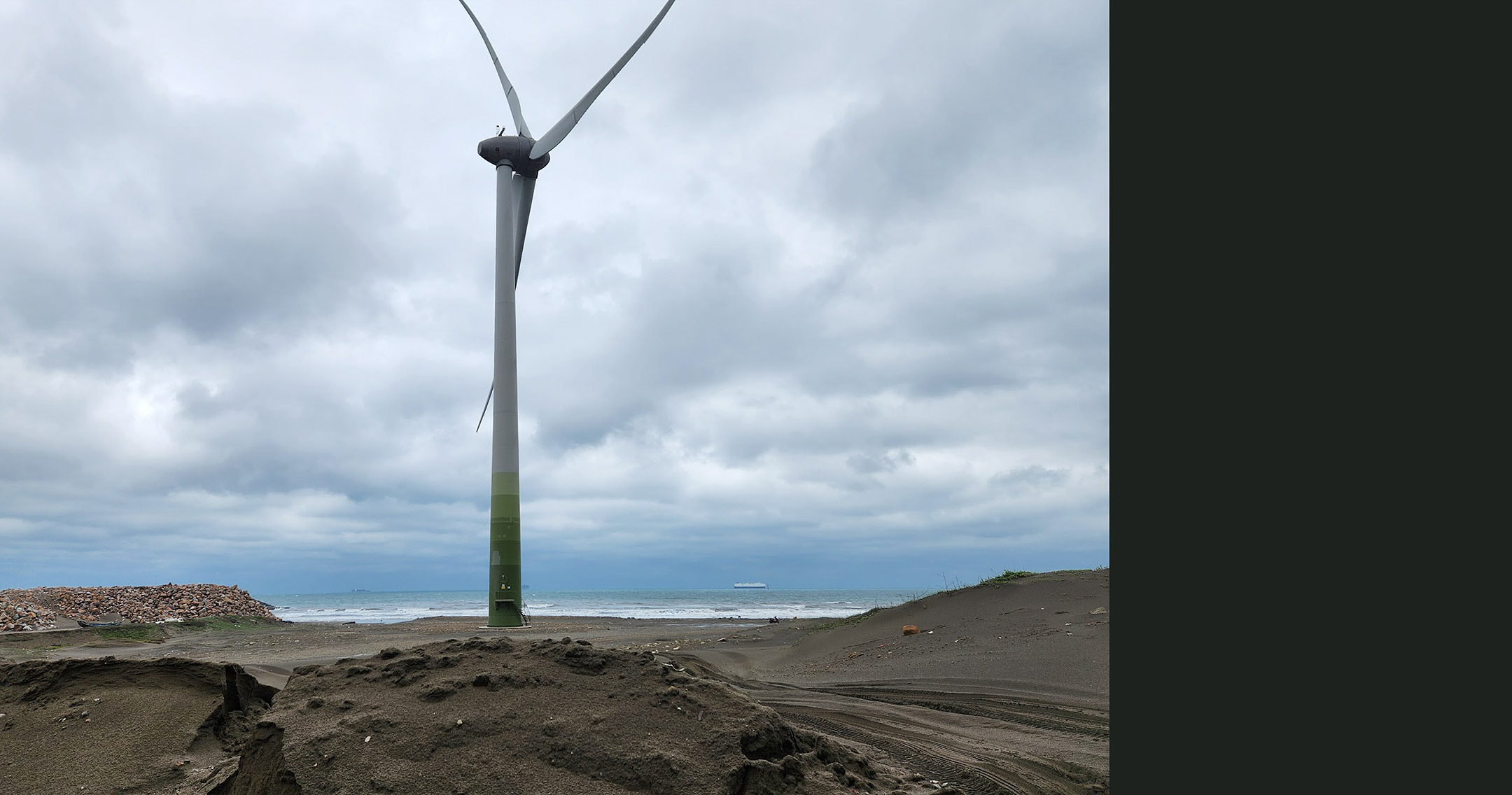
Photo: Marcin Jerzewski
What is happening?
A heated debate over energy stability erupted across the Taiwan Strait amid the U.S. war on Iran. On March 18, the People’s Republic of China’s Taiwan Affairs Office (TAO) issued a press release stating that, due to uncertainty in the Middle East, Taiwan could face an energy shortage. In response to this potential crisis, the TAO proposed that China could be a stable energy source after the “peaceful reunification” of the two sides of the strait. This statement amplifies existing concerns in Taiwan stemming from the country’s dependence on imported energy sources and its vulnerability to a potential maritime blockade. During an interpellation in the Legislative Yuan, Deputy Minister of Economic Affairs Ho Chin-tsang (何晉滄), dismissed these remarks as a form of “cognitive warfare” and asserted Taiwan’s energy security.
What is the broader picture?
Although it boasts energy stability in its propaganda targeted at Taiwan, China is itself at a critical juncture in its energy security strategy amid growing domestic demand, global market instability, and its commitment to energy transition.
Following China’s 14th Lianghui (Two Sessions), the 15th Five-Year Plan was approved, with key policy priorities and an advanced-technology focus signaling growing energy demand alongside China’s energy transition agenda. Under its “New Quality Productive Forces” (新質生產力) framework, China aims to advance an “AI+” initiative and state-led investment in frontier science and sectors, such as 6G, advanced semiconductors, aerospace equipment, humanoid robotics, and embodied AI. It is worth noting that this highly dense technological upgrading could only be realized under conditions of energy stability, underscoring the crucial role of the “New Type of Energy System” (新型儲能發展) within China’s energy transition agenda. The strategy of moving toward the early stage of carbon neutrality involves decarbonization, creating an infrastructure of clean energy hubs, a coastal “nuclear power belt,” and smart grid development.
However, the prolonged Middle East conflict has exposed China’s energy dependency on imported fossil fuels. With the Strait of Hormuz cut off, China’s crude oil imports from Iran — 13 percent of its total imports — are at risk. Moreover, its energy security could provide potential diplomatic leverage for Washington.
According to Taiwan’s Institute for National Defense and Security Research (INDSR), the primary bottleneck for China’s transition is its shortcomings in grid stability, and the strategic role of coal, as the “ballast stone.” Beijing continues to ramp up coal production to ensure domestic stability, further backing it into a corner that could undermine its green energy transition efforts. Furthermore, as commitments to sustainable global supply chains grow, such as the European Union’s Carbon Border Adjustment Mechanism (CBAM), China’s export-led transition to decarbonization is at a disadvantage due to its current energy vulnerabilities and its overall heavily state-controlled policies.
However, as China remains a superpower in critical minerals, this creates a potential trade-off between its dominance and vulnerability in oil and semiconductors, a recurring issue for its high-end AI+ initiative developments under a policy of “Resource Nationalism,” which could lead to future trade deals and negotiations.
Taiwan’s energy security remains structurally fragile. The country imports more than 97% of its energy, with a growing reliance on liquefied natural gas (LNG) as it has phased out nuclear power. Around 30% of this LNG comes from Qatar, which saw its gas facilities struck by Iranian missiles March 19, making supplies highly vulnerable to disruptions in the Strait of Hormuz, a key global chokepoint. Current regional tensions have underscored this risk. Compounding the challenge, Taiwan currently maintains only around 10–11 days of LNG storage, meaning even short-term supply interruptions could quickly translate into domestic shortages. To this end, Taiwan’s Energy Administration has announced that these reserves will be expanded to 14 days’ worth of LNG by next year.
Why does it matter?
Even though China’s 15th Five-Year Plan laid out a promising prospect for energy transition and technological breakthroughs, unresolved vulnerabilities and dependencies signal a more grounded reality for China’s path toward decarbonization, with a potential window for negotiation worth noting.
What’s more, in an era of polycrisis, where states all seek to mitigate the outcome of climate change, geopolitical crises, and domestic politics — whether by shifting toward sustainability or proposing policy innovations — the Middle East conflict and China’s transition commitments serve as a reminder that, in a globalized world, interdependence remains a key factor of influence, for both democracies and authoritarian states.
Moreover, China’s messaging on energy security in Taiwan should be understood through the lens of its “Three Warfares” doctrine — public opinion, psychological, and legal warfare —where the cognitive element plays a central role. By framing itself as a guarantor of Taiwan’s energy stability, Beijing seeks to shape perceptions rather than realities, amplifying fears, deepening societal divisions, and eroding trust in Taiwan’s democratic institutions. In this context, energy security becomes not just an economic issue, but a political battlefield, where narratives are weaponized to weaken public confidence and subtly legitimize China’s sovereignty claims.