

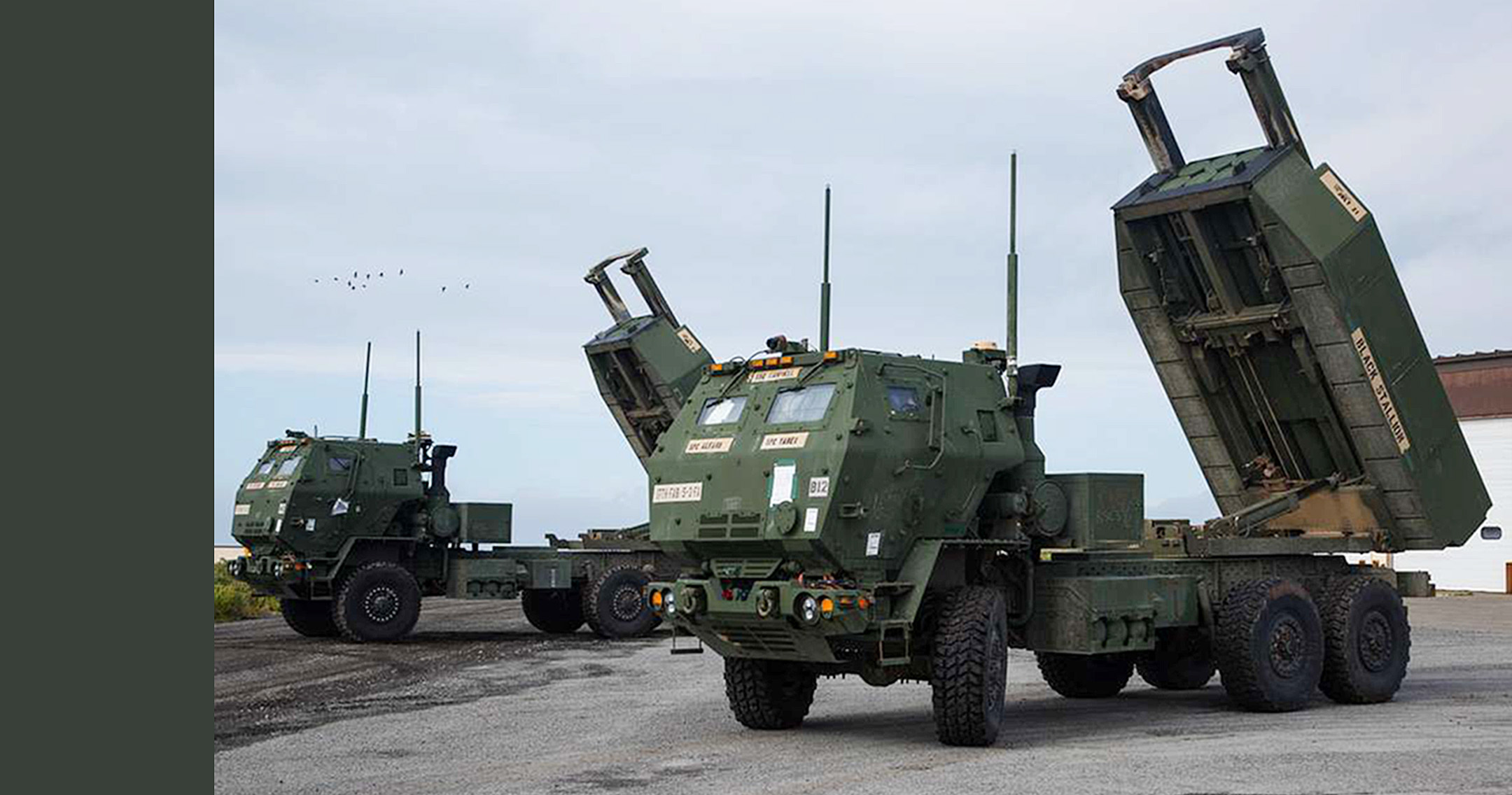
Photo credit: Defense Visual Information Distribution Service; U.S. Army Photo by Spc. Luke Steward
What is happening?
Political gridlock over defense spending in Taiwan has deepened after opposition lawmakers proposed a scaled-down version of the government’s ambitious military spending plan. The administration of President Lai Ching-te (賴清德) previously unveiled a special defense budget worth roughly NT$1.25 trillion (about US$40 billion), intended to accelerate military modernization and strengthen deterrence amid growing pressure from the People’s Republic of China.
However, the opposition-controlled Legislative Yuan — dominated by the Kuomintang (KMT) and the Taiwan People’s Party (TPP)—has refused to advance the proposal. In early March, opposition lawmakers suggested a significantly reduced alternative, reportedly funding only about one-third of the government’s proposal and focusing mainly on a limited set of arms procurements. Taiwan’s defense minister Wellington Koo (顧立雄) rejected the proposal, warning that the cuts and procurement restrictions could undermine key modernization programs and even make certain projects “impossible” to implement.
What is the broader picture?
The current dispute is the latest episode in a prolonged institutional standoff that has defined Taiwanese politics since the 2024 elections. While the presidency remains in the hands of the ruling Democratic Progressive Party (DPP), the legislature is controlled by opposition parties, creating a situation of divided government that has repeatedly stalled key policy initiatives—including defense spending.
The special defense budget has already been delayed multiple times, as opposition lawmakers blocked attempts to move the proposal through the legislative agenda. Critics within the government argue that procedural tactics have been used to prevent the bill from even reaching substantive debate.
At the same time, the opposition itself has struggled to maintain a unified position on the issue. According to DPP legislator Chen Kuan-Ting (陳冠廷), the debate reflects internal divisions within the opposition camp, with different factions advancing competing proposals and priorities for defense spending. He argued that these disagreements have contributed to legislative paralysis and made it difficult to identify a compromise acceptable to all parties.
The opposition, for its part, insists that it supports strengthening Taiwan’s defense but demands greater oversight and clearer procurement planning. KMT lawmakers have described the government’s proposal as “sky-high” spending, lacking sufficient transparency, and have proposed tighter limits on how arms purchases are conducted and completed.
The opposition has also begun advancing its own legislative framework for defense spending. In early March, the KMT caucus in the Legislative Yuan unveiled a draft “Special Act for Strengthening National Defense and Military Procurement from the United States,” which would cap spending at NT$380 billion—roughly one-third of the government’s proposed special budget. The bill focuses on a limited set of U.S. arms procurements, including systems such as HIMARS launchers, M109A7 self-propelled howitzers, and anti-armor missile systems, while introducing stricter oversight provisions and regular reporting requirements to the legislature. The proposal would run until 2028 and would allow the government to introduce a second-phase procurement bill if additional U.S. arms purchases become necessary.
Beyond domestic politics, the debate is unfolding against a backdrop of growing military pressure from China, which continues to conduct exercises around Taiwan and increase military activity near the island.
Why is it important?
The budget standoff carries significant implications for Taiwan’s defense preparedness and its broader strategic position in the Indo-Pacific.
The government’s proposal was designed to accelerate the development of asymmetric defense capabilities—including precision munitions, drones, and other systems intended to complicate a potential invasion scenario. Delays in approving the package risk slowing modernization efforts at a time when the regional security environment is becoming increasingly volatile.
The dispute has also drawn unusual attention from the U.S., Taiwan’s most important security partner and arms supplier. A bipartisan group of U.S. lawmakers recently urged Taiwan’s parliament to move quickly to approve the defense package, warning that the security threat facing the island has “never been greater.”
Washington’s concerns reflect a broader debate about burden sharing and deterrence. American policymakers have repeatedly emphasized that strengthening Taiwan’s own defense capabilities is a critical component of maintaining stability in the Taiwan Strait. President Lai has also warned that continued delays could lead the international community to misunderstand Taiwan’s determination to defend itself.
Ultimately, the current impasse illustrates a fundamental tension in Taiwan’s security policy. While democratic oversight of major defense expenditures is an essential feature of the island’s political system, extended political deadlock risks delaying critical investments in military capability. As tensions with China continue to rise, the debate over Taiwan’s defense budget is becoming not only a domestic political issue but also a test of the country’s ability to sustain credible deterrence.