

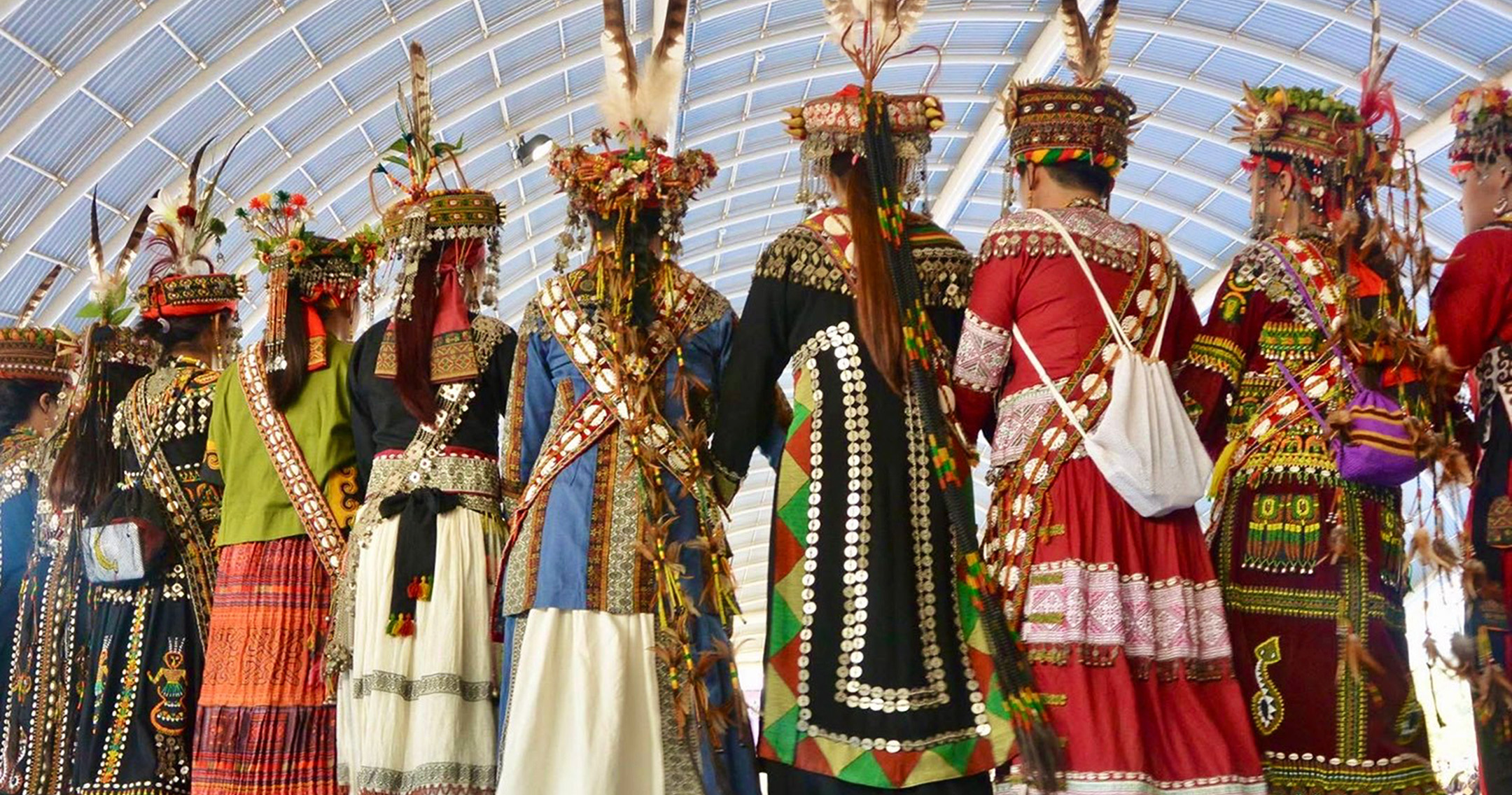
Photo by Olimpia Kot, European Values
What is happening?
On August 1, Taiwan observed Indigenous Peoples Day, a commemoration instituted ten years ago to honor the island’s first inhabitants. Timed eight days prior to the International Day of the World’s Indigenous Peoples, the occasion is intended as a moment for reflecting on historical injustices, safeguarding cultural heritage, and fostering public understanding. Yet, the modalities through which local governments choose to mark this day often lay bare persistent tensions between genuine commemoration and the commodification of culture.
What is the broader picture?
The events of this year made that contrast particularly visible; the opening ceremony in Taipei offered a resonant expression of cultural continuity: The Puzangalan Children’s Choir joined Puyuma singers Sangpuy and Wu Hao-en (吳昊恩) in a cross-generational performance of the Paiwan Indigenous group song Lalai; while Taoyuan municipal government introduced a Mass Rapid Transit (MRT) promotion, granting free rides to passengers wearing at least partial Indigenous attire. While presented as an inclusive gesture, critics contended that this initiative reduced intricate cultural signifiers to superficial visual tokens, thereby perpetuating stereotypes and neglecting the profound symbolic meanings embedded in traditional dress.
Taiwan’s Austronesian Indigenous population numbers approximately 610,000, about 2.6% of the total population. Over half of Taiwan’s Indigenous peoples reside in urban areas. Currently there are 16 officially recognized groups with diverse social, cultural, material, and linguistic traditions. As stated on the Council of Indigenous Peoples’ website, Indigenous peoples are “original owners of Taiwan.” Yet, for over four centuries, they were controlled by successive foreign powers that imposed externally constructed and often derogatory labels upon them. Such imposed names, including savage, 番, with subcategories such as cooked/tamed, 熟番, and raw/wild, 生番, or later mountain compatriots, 山胞, were discriminatory, stigmatizing, and denied Indigenous peoples the agency to define their own identities.
With the rise of social movements in Taiwan, Indigenous peoples also began to advocate for their rights. The Indigenous rights movement has advanced multiple demands, including the restitution of Indigenous names, the establishment of institutions under Indigenous control, the restoration of traditional lands, and the pursuit of self-determination. These efforts resulted in the creation of the Council of Indigenous Peoples, a ministerial-level governing body, the enactment of the Indigenous Peoples Basic Law, and the Indigenous Languages Development Act. In 1997, during the fourth round of constitutional amendments, the term “Indigenous peoples” 原住民族was formally adopted in Mandarin as the sole official designation for Indigenous Peoples. A symbolic culmination of these developments came in 2016, when President Tsai Ing-wen delivered a historic apology to Indigenous peoples on Indigenous Peoples Day.
Despite these significant advancements, a substantial journey remains toward fostering mutual respect and genuine intercultural understanding between Indigenous communities and the broader Taiwanese public. Indigenous peoples continue to face misrepresentation, and their cultural autonomy, particularly in the realm of heritage and self-representation, is frequently overlooked. Notably, Tsai’s historic apology was preceded by several days of Indigenous protests, underscoring demands for tangible action rather than symbolic gestures.
Why does it matter?
The Taoyuan Metro promotion illustrates a troubling superficiality in cultural engagement. By reducing attire imbued with deep symbolic meaning to partial dress or a vague aesthetic, the initiative risks reinforcing outdated stereotypes and perpetuating cultural appropriation. The reliance on station staff, without evidence of specialized training to determine eligibility underscores the arbitrariness and potential for misrepresentation. Such policies oversimplify the cultural specificity of Taiwan’s 16 recognized Indigenous groups and reveal the limited cultural literacy of decision-makers.
While cultural celebrations can serve as entry points for public engagement, they cannot substitute for structural changes that safeguard Indigenous rights and self-representation. The misinterpretation and commodification of Indigenous cultures is not unique to Taiwan but part of a global pattern in which Indigenous peoples are celebrated symbolically while substantive issues of autonomy, land rights, and political participation remain inadequately addressed.